
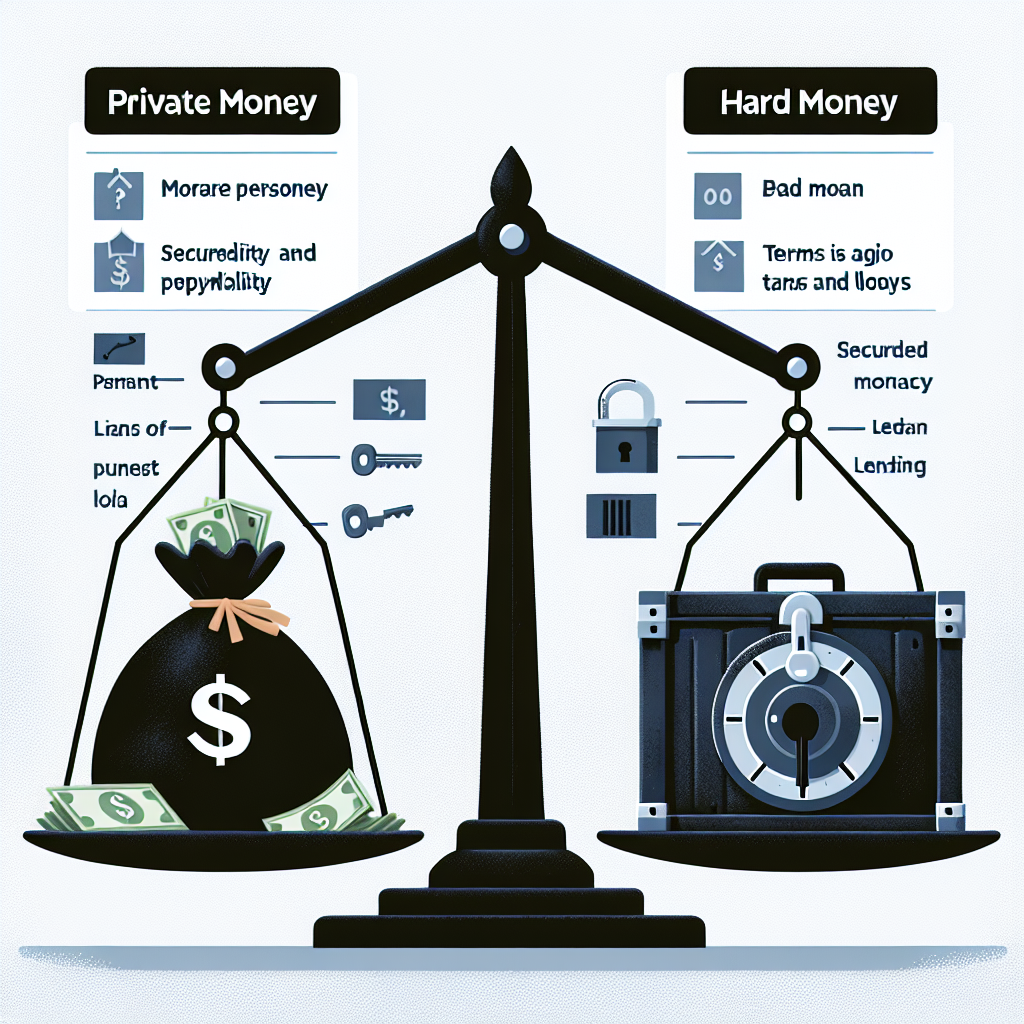
Navigating the Regulatory Landscape: Private Money vs. Hard Money Investment
Navigating the Regulatory Landscape: Private Money vs. Hard Money Investment
When it comes to real estate investment, many individuals turn to private money and hard money lending as a source of capital. However, navigating the regulatory landscape can be complex and confusing for those unfamiliar with the industry. In this article, we will explore the differences between private money and hard money investment, and discuss how investors can navigate the regulatory landscape to ensure compliance and success in their real estate ventures.
Private Money Investment: A Closer Look
Private money lending involves individuals or groups of individuals who lend their own money to real estate investors. These lenders typically do not have to adhere to the same strict regulatory requirements as traditional banks, making private money a more flexible and accessible source of capital for real estate investors. Private money lenders may include wealthy individuals, family members, friends, or accredited investors looking to earn a higher return on their investment.
One of the key advantages of private money investment is the ability to negotiate custom terms and conditions with the lender. This can include flexible repayment schedules, lower interest rates, and higher loan-to-value ratios compared to traditional bank loans. However, it is important for investors to conduct thorough due diligence on their private money lender to ensure that the terms are fair and reasonable.
Hard Money Investment: Understanding the Difference
Hard money lending is a type of private money lending that is typically provided by organizations or companies that specialize in real estate lending. Hard money lenders often have strict underwriting guidelines and require borrowers to meet specific criteria in order to qualify for a loan. While hard money loans may have higher interest rates and fees compared to traditional bank loans, they can be a valuable source of capital for investors who may not qualify for traditional financing.
Hard money lenders are subject to various regulations and licensing requirements, depending on the state in which they operate. Investors should conduct thorough research on the regulatory landscape in their area to ensure that their hard money lender is compliant with all applicable laws and regulations.
Navigating the Regulatory Landscape
As real estate investors consider private money and hard money investment as sources of capital, it is important to navigate the regulatory landscape to ensure compliance with all applicable laws and regulations. Here are some key considerations to keep in mind:
1. Licensing and Registration: Before entering into a private money or hard money lending agreement, investors should verify that the lender is licensed and registered with the appropriate regulatory authorities. This can help protect investors from potential scams and fraudulent activities.
2. Disclosure Requirements: Private money and hard money lenders are required to provide borrowers with complete and accurate disclosures of all loan terms and conditions. Investors should carefully review these disclosures and seek legal advice if necessary to ensure that they fully understand the terms of the loan.
3. Compliance with Usury Laws: Usury laws regulate the maximum amount of interest that can be charged on a loan. Private money and hard money lenders must comply with these laws to avoid penalties and legal consequences. Investors should be aware of the usury laws in their state and ensure that their lender is not charging excessive interest rates.
4. Due Diligence: Before entering into any lending agreement, investors should conduct thorough due diligence on the lender to verify their credibility and reputation in the industry. This can include checking references, reviewing online reviews, and researching any past legal disputes or regulatory violations.
In conclusion, navigating the regulatory landscape of private money and hard money investment in real estate requires careful consideration and due diligence. By understanding the differences between private money and hard money lending, and adhering to all applicable laws and regulations, investors can minimize risk and maximize their chances of success in their real estate ventures.


